
kitchen Set Cooking Game Chef
Soft SkipperRole Playing
3.54.00 Reviews
- Version
- 1.2
- Installs
- 1.00M
- Age Rating
- Everyone
Screenshots


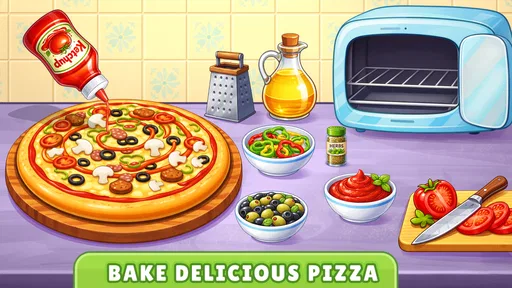

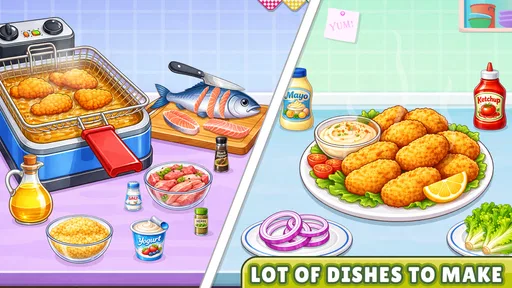
Our Review of kitchen Set Cooking Game Chef
 Analysis by Appyee
I approached kitchen Set Cooking Game Chef expecting a small, easygoing role-playing game built around kitchen play, and that is the right way to understand it. Its appeal is not the scale of a large adventure or the complexity of a restaurant simulator. Instead, it offers a lighter chef-themed experience that should suit short sessions, casual play, and younger players who want something simple to pick up. I found the concept immediately readable: you enter a kitchen setting, work through cooking activities, and make decisions that are easier to understand than the systems found in more demanding role-playing games.
The game is free, made by Soft Skipper, and aimed at Everyone. That combination makes it approachable for families and for anyone who wants to try a cooking game without committing to a purchase. It has passed the one-million-install mark, while its average score sits at 3.5 from roughly 638 ratings. I would read that as a sign of moderate interest rather than universal approval. There is enough attention around it to make trying it reasonable, but the rating also suggests that expectations should remain practical: this is a straightforward kitchen game, not a deep culinary strategy experience.
How the kitchen turns simple actions into decisions
The most important choice in a game like this is how much attention you want to give each activity. A cooking-themed role-playing game can be relaxing when the tasks are clear, but it can become repetitive if every moment asks for the same response. My advice is to treat each kitchen session as a small planning exercise rather than rushing through every available action. Before tapping ahead, look at what the current activity appears to require and decide whether you want to focus on speed, careful completion, or simply exploring the available kitchen interactions.
That approach matters especially for children. A younger player may enjoy the visible chef theme and the feeling of completing a recipe-like task, but an adult helping nearby can turn the game into a useful conversation about order and preparation. What should happen first? Which action seems necessary before the next one? Even when the game remains simple, those questions make the experience more engaging than tapping randomly.
I also found that the best use case is a short break. If I had only a few minutes, a kitchen activity was easier to start than a long-form role-playing game with a story to remember, a character build to manage, or a large map to cross. That makes it a reasonable choice for casual players who want a themed activity without a heavy time commitment. It is less suitable for someone looking for elaborate progression, dramatic storytelling, or the freedom to design a complete restaurant operation.
The store description is brief, but the chef and kitchen focus give the game a clear identity. It is not trying to compete directly with a full restaurant-management alternative where the main challenge is balancing staff, prices, supplies, customer patience, and long-term expansion. It also differs from cooking games that depend mainly on frantic timing. Here, I would approach it as a gentler role-playing interpretation of kitchen play. That distinction helps set the right expectations before downloading it.
One useful habit is to avoid treating every task as a race. When a game presents a familiar cooking theme, it is tempting to tap as quickly as possible, especially if the visual design makes each action feel obvious. A slower first pass is usually better. Learn the rhythm of the activity, notice which choices seem to lead naturally into the next step, and only then try to improve your pace. This gives the game a small but meaningful decision space without pretending that it has the complexity of a professional kitchen simulator.
Where the risk and reward come from
The risk in this experience is not the severe kind found in role-playing games where a poor decision can permanently damage a character or erase hours of progress. Instead, the tradeoff is between efficiency and understanding. Moving quickly may let you finish a kitchen activity sooner, but it can also make the experience feel mechanical if you never pay attention to the sequence. Taking more care can make the session more satisfying, although it may feel slow to players who want constant action.
I think this balance is particularly relevant when sharing the game with a child. If the goal is simply to keep a child occupied for a moment, quick interaction may be enough. If the goal is to make the game a shared activity, it is better to ask the player to explain why they chose a particular kitchen action. That turns a basic game loop into a small exercise in observation. The reward is not only completion; it is the feeling of understanding how the activity is organized.
There is also a tradeoff between accessibility and depth. The Everyone age rating is reassuring for families who want an uncomplicated theme, and the free price lowers the barrier to trying it. At the same time, a design that welcomes very young or inexperienced players may not provide the layered systems that older role-playing fans expect. I would not install this expecting character builds, difficult resource decisions, or a long campaign with major strategic consequences. Its reward is immediate participation, not extensive mastery.
Another practical risk is repetition. A kitchen game can be enjoyable when the setting feels fresh, but familiar actions lose impact if the player has no reason to vary their approach. I recommend playing in modest sessions rather than forcing a long sitting. That is not a criticism unique to this title; it is a sensible way to handle a compact cooking game. Short play helps preserve the novelty of the chef setting and makes it easier to stop before the routine becomes tiring.
For adults comparing it with more intense cooking alternatives, the choice comes down to the kind of pressure you enjoy. A time-focused cooking game is better if you want urgency and rapid coordination. A restaurant simulator is better if you enjoy long-term planning and business decisions. This game makes more sense when you prefer a friendly, low-pressure kitchen theme with role-playing flavor. The reward is convenience and accessibility, while the cost is a smaller strategic ceiling.
Adapting your approach instead of tapping on autopilot
My strongest recommendation is to adapt your play style to the person holding the device. For a first-time player, explain the kitchen context without taking over. Let them choose the next action and only offer a hint when they appear stuck. For a more experienced casual player, step back and encourage them to complete the sequence independently. This works better than assuming that every player wants the same level of guidance.
It is also worth changing the purpose of each session. One session can be about learning the flow; another can focus on completing tasks more smoothly; a later one can simply be relaxed play. This gives a compact game more variety without inventing systems that are not part of it. I found that the title feels more rewarding when I bring a small objective to the session instead of opening it with no expectation beyond repeated tapping.
A useful everyday scenario would be a parent waiting during a short appointment with a child. A large adventure game may be inconvenient because it demands concentration and continuity, while a competitive game may create unnecessary frustration. A kitchen-themed activity is easier to explain, easier to pause mentally, and more comfortable for shared play. The adult can ask the child to identify the next cooking step, then let the child make the decision. That is a realistic strength of this particular concept: it can function as a small interactive activity rather than only as solitary entertainment.
On the other hand, I would skip it if my main goal were to improve real cooking skills. The game’s chef theme may encourage interest in food and preparation, but it should not replace an actual recipe, safety guidance, or supervised kitchen practice. Someone looking for precise ingredients, cooking temperatures, timing lessons, or nutritional information would be better served by a cooking educational app or a reliable recipe tool. This game is entertainment first, and treating it as a practical kitchen manual would be the wrong use case.
Device compatibility is also straightforward for a broad Android audience because the game supports Android 6.0 and later. The current release is version 1.2, which is useful to know when checking whether an older phone or tablet can run it. I would still keep expectations realistic on older hardware: a compatible operating system does not automatically mean every device will feel equally comfortable, particularly if the screen is small or the device is shared with other family members.
Because the game is free, the decision to try it is relatively easy. The more important decision is whether its style matches your patience level. If you dislike simple repetition, a free download will not solve that mismatch. If you enjoy short, approachable activities and like the idea of a chef setting without demanding management systems, the low entry cost makes experimentation sensible. I would give it a fair trial, then judge it by whether the kitchen interactions remain pleasant after the initial novelty fades.
What can keep the experience useful over time
The long-term value here depends less on endless complexity and more on how you frame the game. A player who expects a constantly expanding role-playing world may run out of reasons to return. A player who sees it as a casual kitchen activity can use it whenever they want a familiar, low-pressure break. That difference in expectation explains why the moderate average rating matters: some users will appreciate the simplicity, while others will consider the same simplicity a limitation.
I would use it as one option in a small rotation rather than as the only game on a device. Pairing it with a more demanding role-playing title creates a useful contrast. After a long session involving exploration, combat, or character planning, a chef-themed activity can feel refreshing because it asks less from the player. Conversely, after several short kitchen sessions, a deeper game may be preferable if you want meaningful progression and more varied decisions.
There is a planning horizon even in a simple game. In the immediate term, you are deciding what to do next in the kitchen. Over a few sessions, you are learning whether the activity stays enjoyable. Over a longer period, you are deciding whether the game offers enough variety for your household or whether another cooking title would provide a better fit. Thinking in those stages prevents the common mistake of judging a casual game as though it promised the scope of a premium role-playing adventure.
The install figure, now above one million, tells me that the concept has reached a substantial audience, but popularity alone is not a reason to keep it installed. I would keep it for a child who enjoys chef themes, for family members who prefer uncomplicated interaction, or for myself when I want a brief change of pace. I would remove it if I wanted deeper planning, stronger narrative development, or a demanding test of timing. The right choice depends on the role the game is expected to play.
One non-obvious benefit is that the game can work as a conversation starter. Instead of silently handing over the phone, an adult can turn each kitchen activity into a shared prediction: what action seems logical, what might happen next, and whether a different order would feel better. That does not transform the game into an educational product, but it does make the basic design more valuable in a family setting. The player is not only consuming content; they are explaining decisions.
Its limitation is the reverse. If you play alone and need a strong sense of discovery, the chef setting may not be enough to sustain interest indefinitely. Casual role-playing games often depend on a steady stream of new goals, and a compact kitchen concept has less room for surprise than a large adventure. I would therefore recommend it more confidently for occasional play than for someone searching for a single long-term mobile game.
My strategy verdict for different kinds of players
After spending time with the game, I see kitchen Set Cooking Game Chef as a friendly, accessible choice for casual role-playing play rather than a serious cooking simulator. Soft Skipper has centered the experience on a kitchen theme that is easy to understand, and the free price makes it simple to test. The Everyone rating also makes it a natural candidate for family use, provided adults remember that the game is entertainment and not a substitute for real-world cooking instruction.
I would recommend it to younger players who enjoy chef settings, adults looking for a low-pressure distraction, and families wanting a simple activity that can be discussed together. I would be more cautious with experienced role-playing fans, restaurant-management enthusiasts, and players who need complex progression. For those groups, a deeper alternative will probably provide better long-term satisfaction, even if it demands more time or concentration.
The 3.5 average rating from around 638 ratings supports that balanced conclusion. There is enough evidence of interest to make the game worth a try, but not enough to justify describing it as a must-have. Its strongest decision is the choice to remain approachable; its main tradeoff is that approachability can limit depth. If you understand that exchange before installing, you are much more likely to enjoy what it offers.
My final advice is to start with a short session, let a new player make the kitchen choices without constant help, and judge the game by its moment-to-moment comfort rather than by expectations borrowed from larger role-playing titles. With Android 6.0 or later, the free download is an easy experiment. Choose it for simple chef-themed play, not for advanced restaurant strategy, and it can earn a useful place among occasional games on an Android device.
Verdict
Strengths of kitchen Set Cooking Game Chef
- Simple controls make cooking tasks easy to learn.
- Bright visuals and playful animations suit younger players.
- Many recipes provide variety during short play sessions.
- Offline play is convenient when no internet connection is available.
- Quick levels work well for casual gaming breaks.
Limitations of kitchen Set Cooking Game Chef
- Gameplay can become repetitive after preparing the same dishes often.
- Some upgrades or items may require patience or in-app purchases.
- Ads can interrupt the cooking flow between levels.
- Limited challenge may disappoint experienced cooking-game players.
- Progress may feel slow without regularly replaying completed stages.
Similar Picks in This Category
View All
Hair Dye
CrazyLabs LTD4.4

Monster High™ Beauty Salon
CrazyLabs LTD4.5

Bus Simulator - Bus Games 3D
Jima Apps4.4

Flight Pilot: 3D Simulator
Wildlife Studios4.1


Super Stylist Fashion Makeover
CrazyLabs LTD4.4
Frequently Asked Questions
What is Kitchen Set Cooking Game Chef?
Kitchen Set Cooking Game Chef is a casual cooking simulation game where you prepare meals, follow recipes, serve customers, and manage different kitchen activities. It is designed for players who enjoy time-management challenges and restaurant-style gameplay. As you progress, you can usually unlock new dishes, ingredients, cooking tools, and locations while trying to complete each order accurately and quickly.
How do you play Kitchen Set Cooking Game Chef?
Gameplay generally involves selecting ingredients, completing cooking steps in the correct order, and serving dishes before customers lose patience. The controls are made for touchscreens, so actions such as tapping, dragging, and selecting kitchen stations feel straightforward. Success depends on learning recipes, organizing your tasks efficiently, and avoiding burnt food, incorrect ingredients, or delayed orders.
Is Kitchen Set Cooking Game Chef free to download?
Kitchen Set Cooking Game Chef can typically be downloaded and played without an upfront purchase, although the exact availability and pricing may depend on the Android or iOS store in your region. Like many free cooking games, it may include optional in-app purchases for coins, boosters, upgrades, or other resources. Check the store listing before downloading for current purchase details.
Can Kitchen Set Cooking Game Chef be played offline?
Some parts of Kitchen Set Cooking Game Chef may work without a constant internet connection, especially basic cooking levels that have already been downloaded. However, an internet connection may still be required for advertisements, cloud saving, updates, special events, or in-app purchases. If offline access is important to you, test the game in airplane mode after installation because requirements can change with updates.
Is Kitchen Set Cooking Game Chef suitable for children?
Kitchen Set Cooking Game Chef is generally easy to understand and can be suitable for children who enjoy colorful cooking and time-management games. Nevertheless, parents should review the recommended age rating, advertising content, and available in-app purchases before allowing younger players to use it. Fast-paced levels may also become challenging, so the game is best enjoyed with suitable screen-time limits.
Play our best games!


